Functional Lab Testing
*
Functional Lab Testing *
Functional lab testing is an incredible tool available to us today that provides us with real time data and allows us to make connections between symptoms and their real root, under the surface causes. Functional lab testing gives us a better picture of the actual function of your body systems, such as what is really going on in your gut microbiome. Almost all symptoms can be caused by a number of imbalances within the body. With this tangible information from testing, we can test and not guess what is causing your symptoms, and create an extremely specific and tailored healing protocol to address what is best for YOU.
Gut Healing Testing Philosophy
The main two lab tests that we utilize in practice for gut healing are the GI-MAP and the MRT Food Sensitivity test. As you will read in their descriptions below, the GI-MAP is the gold standard for stool testing, and is a comprehensive and very sensitive qPCR test. This gives us an amplified view of what is happening in your gut – what good bacteria is present, what bad bacteria has overgrown, and if there are pathogens that have taken up residence, such as parasites. While this test it itself will provide us with a clear plan of action, we believe that for gut healing to fully take place, foods that cause sensitivity should be eliminated for the duration of the protocol. Food sensitivities present as many different symptoms and can be extremely hard to determine without testing. They may appear as clear GI discomfort after eating like bloating, but they could also appear as allergies, a rash, headache – and symptoms may not even appear for up to 72 hours after the food was consumed! If we are already dealing with a sensitive gut that needs healing and a compromised gut barrier, food sensitivities will just drive inflammation further. We believe that with eliminating sensitive foods, this is an essential key to the bigger picture of restoring gut health in the long term.
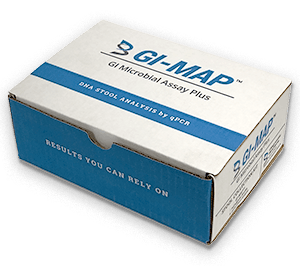
GI-MAP
The GI Microbial Assay Plus test uses DNA analysis to assess health benefits or disease risks from microorganisms that inhabit the body.
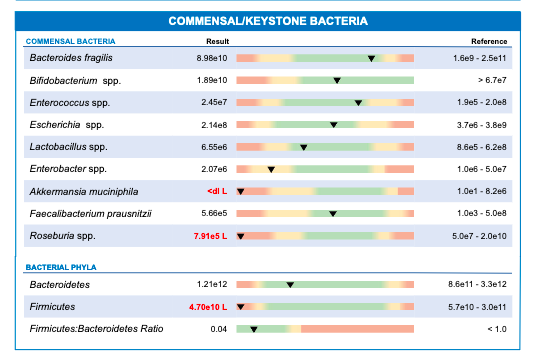
Unlike culturing or microscopy tests, the GI-MAP uses qPCR (quantitative real-time polymerase chain reaction) and can detect bacterial species that other tests may miss. This type of testing is considered one of the most powerful and sensitive gene analysis techniques available.
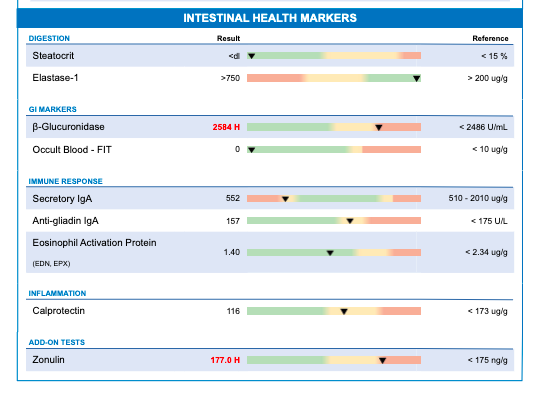
The GI-MAP gives quantitative information about many pathogens.
Knowing how much DNA is present gives us critical information for making better decisions about our protocols.
Because the GI-MAP uses DNA sequencing, it is a very sensitive stool test. As the practitioner, it gives us a more comprehensive understanding of the gut microbiome, so that we can be detailed and specific in our protocol and yield successful and lasting results.
MRT Food Sensitivity Testing
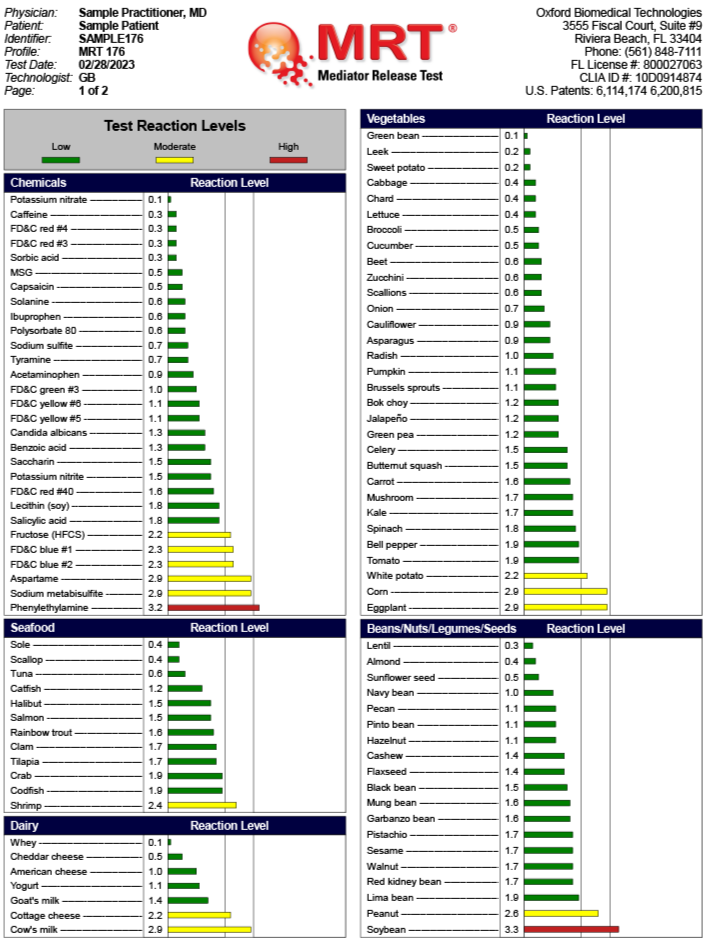
The Mediator Release Test quantifies the inflammatory potential of 176 foods and chemicals through mediator release testing via a blood panel.
this test has extremely high accuracy and reliability compared to other food sensitivity tests
with this test, the goal is to identify and eliminate inflammatory foods temporarily while we heal the gut, to bring down inflammation as a whole
An elimination diet is not the best way to determine what foods are reactive.
Adverse food reactions exist on a spectrum. Understandably, removing a highly inflammatory food may bring relief quickly. However, a lot of the time you may have a long list of mildly reactive foods. These may not only be hard to determine on your own from observation, but a reaction may occur only when several of these low reactive foods are eaten together, and/or eaten often.
Additionally, adverse food reactions may appear up to 72 hours after consumption, and may present as symptoms we may not typically think of as food related. You can see why this process is very nuanced, and critical to consider!
Some Conditions Associated Food Sensitivities
Celiac disease
Ulcerative colitis
GERD
Asthma
Migraines
Interstitial cystitis
Tinnitus
Rhinitis/sinusitis
Otitis media
ADHD
Urticaria
Angio-edema
Rheumatological disorders
Atopy
IBS
We always start with these two tests. While we can run and interpret the other test offerings below, we don’t typically begin with these. The reason for this is because with the GI-MAP and MRT testing, we are able to carry out a well rounded protocol that addresses GI issues from the bottom up and any dysfunction that is present should be resolved. This is why, for example we will not run a SIBO test off the bat. While SIBO is not a marker that appears on the GI-MAP, it is typically a symptom of dysfunction at its core - so if we only ran a SIBO test and carried out a SIBO protocol, we would be addressing this downstream condition, not the dysfunction in the gut that allowed it to take hold in the first place. When we address foundational function, these other, more specific issues tend to be resolved. Of course, we may find the need to carry out these tests on a case-by-case basis if we have already carried out a protocol and suspect that there is still an issue, where we can then bring in more targeted care.
SIBO Testing
Small Intestinal Bacterial Overgrowth is when excessive bacteria has migrated up to the small intestine, where it should not be located.
it is important to note that SIBO does not occur on its own, and is the downstream symptom of imbalance and dysfunction in the GI tract. We must ask: what conditions were in place that allowed this issue to take hold in the first place? By following a protocol based off of GI-MAP findings, this allows us to address dysfunction at its core, while oftentimes will resolve SIBO, if it is present. This is why we will never start with a SIBO test, but will only turn to it if we have carried out a full healing protocol and there are symptoms lingering
SIBO symptoms typically include nausea, bloating, vomiting, diarrhea, constipation, malnutrition, and malabsorption. However, SIBO can appear differently among individuals. These symptoms usually arise after eating carbohydrates, including fruit or vegetables, when bacteria feeds on them.
The SIBO test is an at home breath test, in which hydrogen and methane are assessed – gasses that are not normally present in breath – to determine if bacterial overgrowth is present
Yeast Culture Profile
The Yeast Culture / Sensitivities Profile is a standalone stool test that specifically screens for yeast, such as Candida.
We will always start by running a GI-MAP first as this is the most comprehensive stool test. This being said, yeast is one of the most difficult pathogens to be picked up on any stool test, and won’t always appear on the GI-MAP even if it is present.
When a client presents with symptoms that leads us to believe yeast could be present, this is when we will run this test
Testing Disclaimers
These tests and their interpretation will not treat, cure, mitigate, or diagnose diseases
The information (the test/company provides) is for educational and informational use only
The information is not intended to be used by the customer for any diagnostic purpose and is not a substitute for professional medical advice
Customers should always seek the advice of their physician or other healthcare providers with any questions they may have regarding the diagnosis, cure, treatment, mitigation, or prevention of any disease or other medical condition or impairment or the status of their health.
The services and guidance provided by the holistic practitioner is not medical treatment